
Your Website Isn’t for Google. It’s for People.

(And the People Calling You Are Probably Women.)

There’s a particular type of website we see all the time in the home improvement and home service world.

You know the one.


It has:

  • A headline stuffed with keywords

  • A paragraph listing every service variation imaginable

  • A footer that includes every county within a 90-mile radius

  • Pages titled things like:
    “Best Kitchen Remodeling Contractor Richmond VA Henrico Chesterfield Hanover Goochland Powhatan.”

Technically? It’s “optimized.”
Strategically? It might even rank.

But emotionally?
It’s doing absolutely nothing.

And that’s a problem.


The SEO-Only Website Formula


Many business owners — especially in trades and home services — are pitched a very specific strategy:


“We’ll build you a site that Google loves.”


Which often translates into:


  • Keyword density over clarity

  • Location stuffing over storytelling

  • Service pages written for algorithms

  • No attention to how humans actually read

Yes, search visibility matters. Of course it does.


But when your entire website feels like it was written by a robot trying to impress another robot… the real visitor feels it.


And the real visitor is the one holding the phone.


The Primary Decision Maker You Might Be Overlooking


In many households — especially for interior projects, remodels, landscaping, painting, organization, wellness services — women are the primary researcher and first caller.


She is:


  • Comparing 3–5 companies

  • Reading tone

  • Looking at photos

  • Checking reviews

  • Assessing professionalism

  • Deciding if she feels comfortable inviting you into her home

And here’s the truth:


She is not moved by a wall of counties and keyword strings.


She’s asking:


  • Do I trust this company?

  • Do they seem organized?

  • Do they care?

  • Will they communicate well?

  • Do their photos reflect quality?

  • Does this feel safe and professional?

If your website reads like a search engine checklist, you’re missing the emotional connection entirely. Ranking Is Not the Same as Converting


Let’s say your site ranks well.


But when someone lands there, they see:


  • Long blocks of repetitive text

  • No clear call to action

  • Generic stock images

  • Robotic tone

  • No personality

  • No clarity on process

They leave.


Google may have sent them to you. But your site didn’t keep them.


High-performing websites balance three things:


  1. Search visibility

  2. User experience

  3. Emotional trust

Miss one, and performance drops. Miss two, and you’re just paying for traffic that never converts.


SEO Should Support the Experience — Not Replace It


Good SEO is strategic.


It’s:


  • Structured page hierarchy

  • Intent-driven service pages

  • Clear location signals (without stuffing)

  • Fast load speed

  • Clean metadata

  • Smart internal linking

It’s not:


  • Repeating “Richmond VA plumber near me” 27 times

  • Listing every county in every paragraph

  • Writing for bots instead of humans

Google has evolved. It increasingly prioritizes user behavior:


  • Time on site

  • Engagement

  • Bounce rate

  • Quality signals

If your content is unreadable, your metrics will reflect it.


Especially in Home Services, Trust Is Everything


When someone hires:


  • A remodeler

  • A contractor

  • A painter

  • A roofer

  • A wellness provider

  • A home organizer

  • A cleaning service

They aren’t just buying a service.


They’re allowing access to their personal space.


That decision is emotional.


Your website must communicate:


  • Professionalism

  • Safety

  • Organization

  • Clear process

  • Strong communication

  • Real results

Not just “We service Richmond, Midlothian, Chesterfield, Mechanicsville, Hanover…”


The Subtle Signals Women Notice


Women (who often manage household logistics and scheduling) tend to notice:


  • Is the site easy to navigate?

  • Are before-and-after photos clear and real?

  • Is pricing transparent or at least explained?

  • Is the process outlined?

  • Does the brand feel stable?

  • Is the tone respectful and professional?

  • Are there real testimonials?

If your site feels rushed, chaotic, or generic — that translates to how your business might operate. Fair or not, perception shapes action.


The Better Approach


Instead of building a “Google-first” website, build a human-first website that is strategically optimized.

That means:


  • Writing like a real person

  • Speaking directly to the client’s concerns

  • Showing your process clearly

  • Featuring authentic photography

  • Using SEO intentionally — not obsessively

  • Creating clean, confident calls to action

When SEO and user experience work together, you get:


  • Higher-quality leads

  • Better conversions

  • Fewer price shoppers

  • More trust from the first interaction

If Your Website Feels Like a Keyword List…


It might be time to ask:


  • Does this reflect how I actually run my business?

  • Would I hire me based on this?

  • Does this build trust — or just visibility?

Because visibility without trust is just noise.


And in home services especially, the business that feels safest, clearest, and most professional often wins — even if they aren’t the cheapest.


Your website shouldn’t just attract Google.


It should attract the person who is about to invite you into her home. And that’s a much higher standard.


August 14, 2026
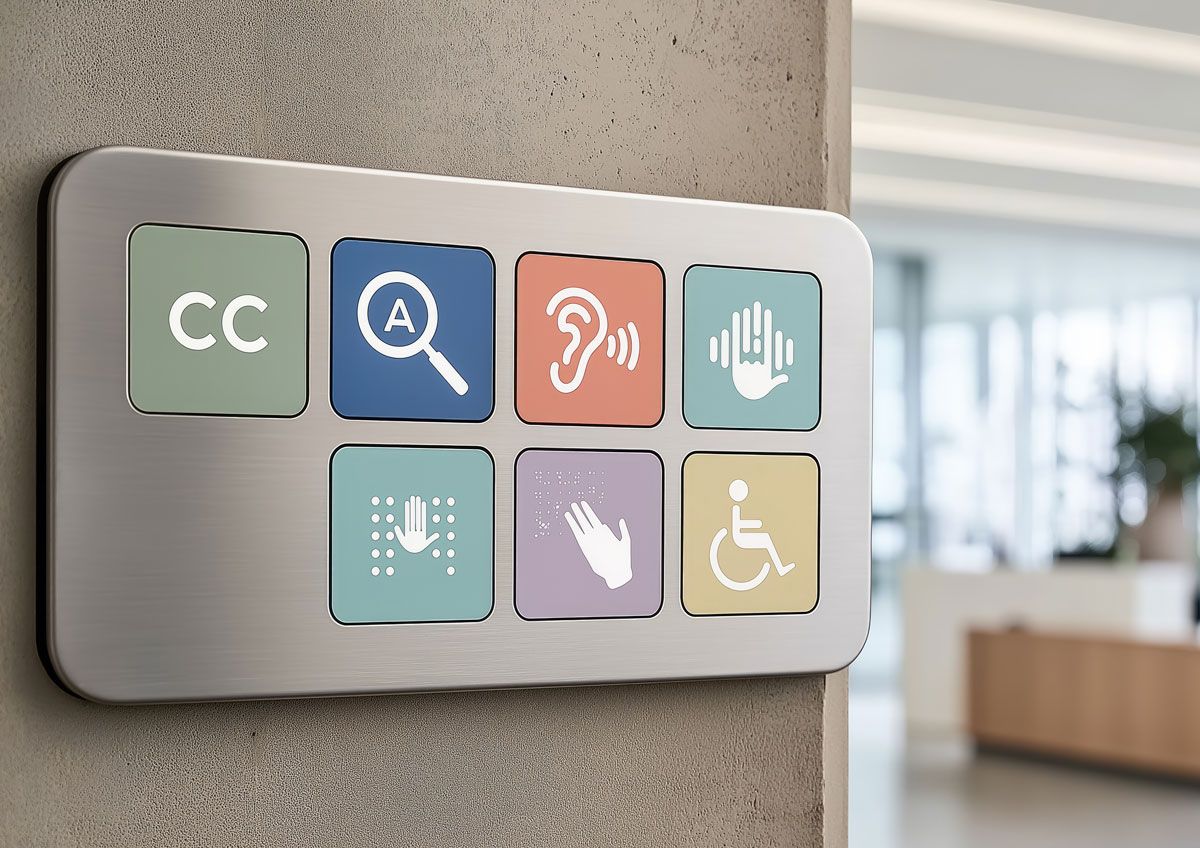
Website accessibility has been a conversation for years, but recent changes to federal accessibility requirements are putting an even bigger spotlight on how websites work for people with disabilities. And if your website hasn’t been reviewed for accessibility recently, now is a good time to take another look. At River City Advertising, we have the tools to add accessibility-focused features that are easier for everyone to use. What Changed With ADA Website Accessibility? In 2024, the U.S. Department of Justice issued a new rule under Title II of the Americans with Disabilities Act establishing a specific technical accessibility standard for websites and mobile apps provided by state and local governments. That standard is WCAG 2.1 Level AA —a widely recognized set of Web Content Accessibility Guidelines designed to make digital content more accessible to people with visual, auditory, physical, cognitive and other disabilities. In 2026, the DOJ extended the deadlines for these public entities: April 26, 2027: State and local government entities with populations of 50,000 or more April 26, 2028: Smaller public entities and special district governments While these particular deadlines apply to state and local governments, the changes reinforce something that affects organizations of all kinds: website accessibility is becoming increasingly important. Businesses should also remember that accessibility obligations can vary depending on the type of organization, services provided and applicable federal, state and local laws. What Does an Accessible Website Actually Mean? Accessibility isn't simply adding a button to your website. An accessible website is designed so people with disabilities can navigate, understand and interact with its content—including visitors who use screen readers, keyboard navigation or other assistive technologies. Some of the elements that can affect accessibility include: Alternative text for meaningful images Appropriate color contrast between text and backgrounds Clear heading structures Keyboard-friendly navigation Properly labeled buttons, links and form fields Readable text and logical page layouts Accessible forms Captions or alternatives for multimedia content Correct website language settings Content that works effectively with screen readers Many of these features also happen to make a website easier to use for everyone , not only visitors with disabilities. How Our Platform Helps Us Build More Accessible Websites At River City Advertising accessibility isn't treated as an afterthought. Our platform includes built-in functionality that can help developers create more accessible websites, including support for alternative text, keyboard navigation and automatic website language definition. Our platform also integrates with accessibility solutions such as UserWay and AudioEye for businesses and organizations that want additional accessibility tools, monitoring and remediation capabilities. However, there is an important distinction: No website platform, plugin or accessibility widget can automatically guarantee that a website is 100% ADA compliant. Accessibility depends on the platform and how the website is designed, written, maintained and updated. For example, adding an accessibility tool doesn't fix a poorly structured page, unclear link text, an inaccessible third-party application or every issue created when new content is added. That is why accessibility should be viewed as an ongoing website-management practice rather than a one-time checkbox. Why Businesses Should Pay Attention Now Even if the newest Title II deadlines don't apply directly to your business, there are several reasons to make website accessibility a priority. Reach more people. An accessible website makes it easier for more potential customers to interact with your business online. Create a better user experience. Clear navigation, readable content, properly labeled forms and thoughtful page structure benefit everyone. Support your SEO efforts. Several accessibility best practices—such as descriptive image text, organized headings and well-structured content—can also help search engines better understand your website. Reduce unnecessary risk. Digital accessibility continues to be an important legal and regulatory issue. Proactively improving accessibility is much better than waiting until someone identifies a problem. Prepare your website for the future. Accessibility standards and expectations continue to evolve. Building accessibility into your website now makes it easier to adapt as requirements change. Accessibility Isn't "Set It and Forget It" This may be the most important takeaway. Your website can become less accessible over time as new pages, images, videos, forms, integrations and other content are added. That's why website accessibility should be part of ongoing website management. At River City Advertising, we can help businesses evaluate their current websites, identify accessibility concerns and determine what tools or updates may make sense. Is It Time for an Accessibility Check? If you're unsure how your current website measures up, we can help you take a closer look. Contact River City Advertising to talk about your website, accessibility options and how we can help make your online presence easier for more people to use.  This article is provided for general informational purposes and is not legal advice. ADA and digital accessibility requirements can vary depending on your organization and jurisdiction. Businesses with questions about their specific legal obligations should consult qualified legal counsel.
Silhouetted profile with glowing tech symbols and data overlays against a light background
By Jessica Ellett June 17, 2026
Artificial intelligence has changed the way businesses create content, brainstorm ideas, and tackle day-to-day marketing tasks.
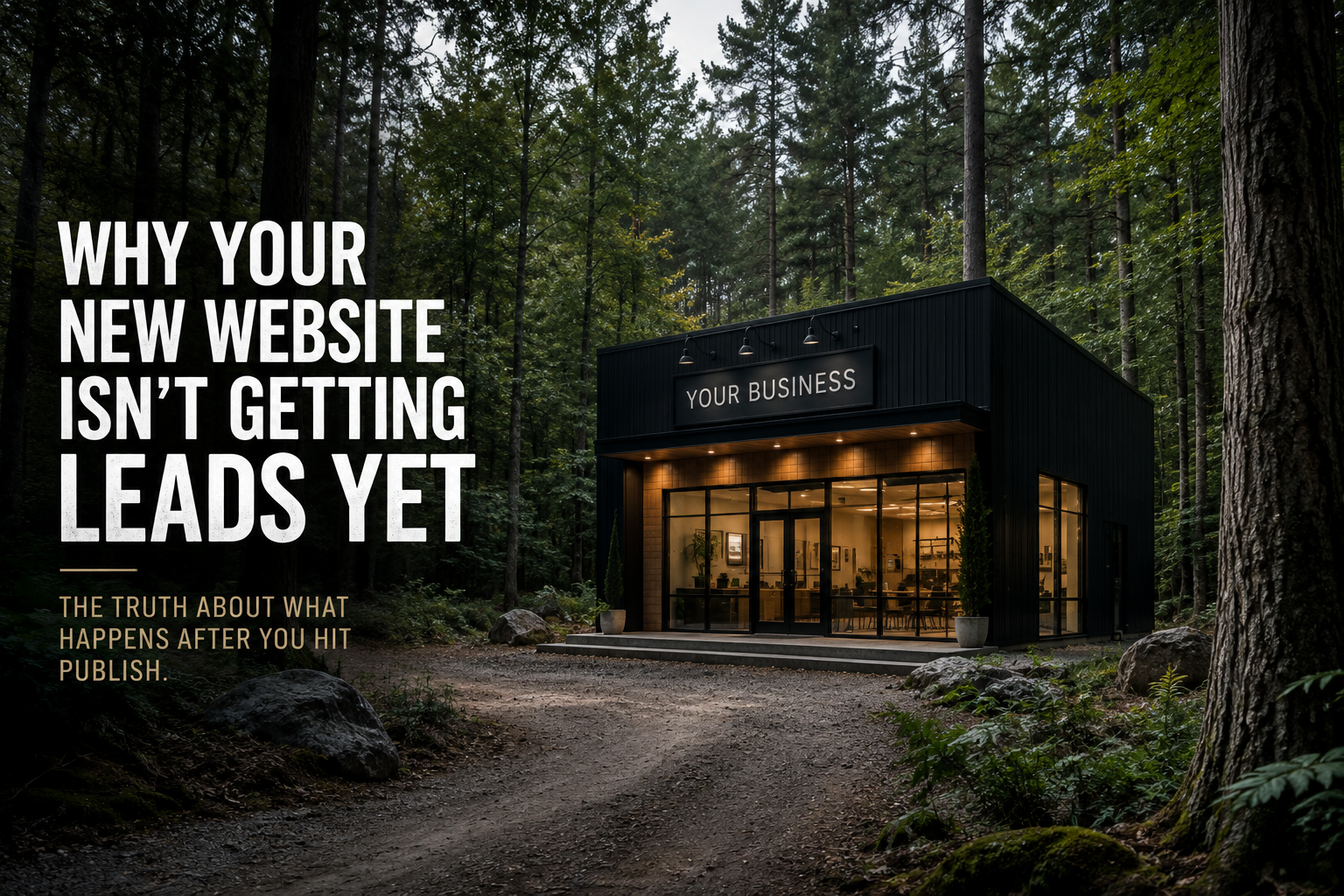
Website mockup: black cabin office in a forest with bold text, “Why your new website isn’t getting leads yet”
By Justin Ellett May 18, 2026
You launched a brand-new website.
An isometric map shows a small suburban neighborhood with several houses, roads, and a central roundabout with a pin.
By Jessica Ellett March 31, 2026
Tiny Roundabouts & Bad Branding: Why Ignoring the Basics Costs You More in the End
Musician playing acoustic guitar on a warmly lit stage with blurred band members in the background
By Jessica Ellett March 16, 2026
For musicians, a website isn’t just a place to store information. It’s a place to create an experience.
Hands collaborating over colorful notes and sketches on a table during a planning meeting
By Jessica Ellett November 6, 2025
Branding Mistakes That Quietly Cost Small Businesses Thousands
Black-and-white speech icon with a face silhouette and sound waves in a circle
By Jessica Ellett August 22, 2025
The Tiny Words That Make a Big Difference in How You’re Heard
Billboard reading “TRENDS 2025” against a blue sky with clouds
By Jessica Ellett July 8, 2025
Branding Heat Check: What’s Sizzling This Summer
Two coworkers shaking hands in a bright office with colleagues smiling in the background
By Jessica Ellett March 6, 2025
Why Getting Back to People Matters
Modern office with people collaborating alongside humanoid robots and digital interfaces
By Jessica Ellett January 22, 2025
Should Advertising agencies be embracing AI?